
Fertilizer Burn: Symptoms and How to Fix Over-Fertilization
Fertilizer burn symptoms look like drought: brown leaf edges, wilting, stunted seedlings. It is salt injury, and quick watering can save the crop.
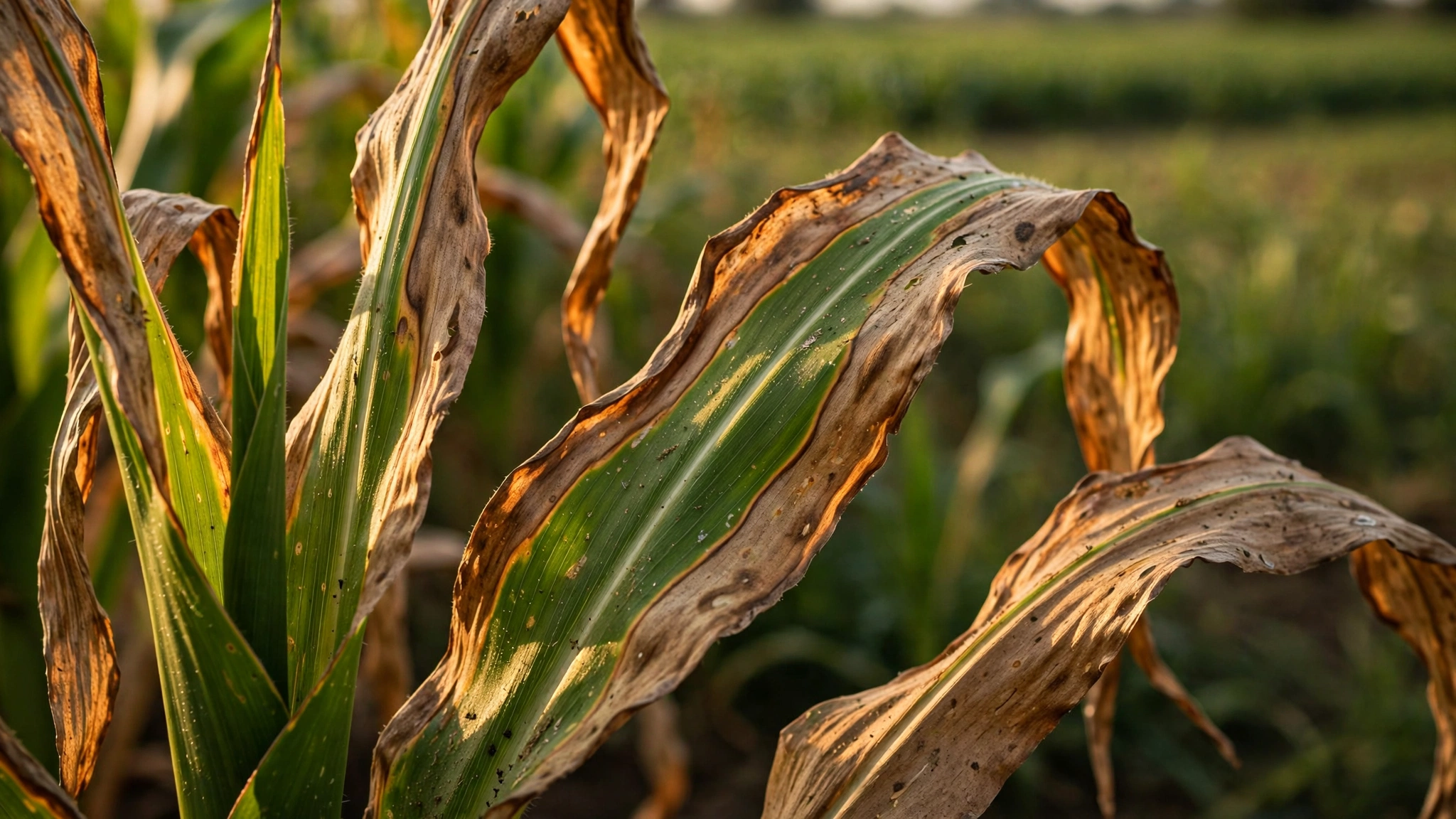
Fertilizer burn symptoms (also spelled fertiliser burn in British English) are easy to misread, and that misreading costs farmers twice: first the damaged crop, then the wrong treatment. Burnt plants look thirsty, with brown crispy leaf margins, wilting even in moist soil, and young seedlings that emerge and then collapse. The direct answer is that fertilizer burn is salt injury, not a disease and not drought, and it happens when too much fertilizer salt sits near roots or on leaves, pulling water out of plant tissue instead of into it.
To understand why, remember that all chemical fertilizers are salts. Urea, DAP, and MOP dissolve into ions in soil water, and roots absorb water by osmosis, which only works when the soil solution is less salty than the inside of the root cells. Dump a heavy dose of fertilizer near the roots and you flip that gradient: water moves out of the roots into the salty soil, and the plant dehydrates while standing in damp earth. That is why burn looks so much like drought.
Recognizing the symptoms
The classic early symptom is leaf margin burn, sometimes called tip burn. The edges and tips of leaves turn yellow, then brown and papery, while the center of the leaf may still look green. This pattern appears because salts accumulate at the leaf margins as water evaporates. In lawns and close-planted crops you may instead see irregular brown patches where the spreader overlapped and doubled the dose.
Seedlings show it differently and more severely. Seeds germinating in soil with banded fertilizer too close by may fail to emerge at all, or emerge with burnt root tips and then stall. DAP placed in direct contact with seed is a well-known cause, because the seedling's tiny root system cannot escape the salty zone. This is why placement guidelines always keep fertilizer a few centimeters away from the seed row.
Foliar burn is the third pattern. Spraying fertilizer solutions on leaves in hot midday sun, or at too high a concentration, leaves scorched spots where droplets sat. Urea sprays are the usual culprit. The rule is simple: foliar feeds go on in the cool of early morning or evening, at the labeled dilution, never stronger.
What causes burn
Several common mistakes cause burn. The most frequent is simple over-application, applying more bags than the recommendation calls for, often because a previous dose seemed to work well so the farmer doubled it. The second is poor spreading: overlapping passes with a broadcast spreader, or dumping fertilizer in heaps around the base of plants instead of spreading it evenly. The third is bad timing, top-dressing urea onto dry soil with no rain or irrigation to dissolve it, so granules sit against stems and roots in concentrated form.
A fourth cause surprises many people: fertilizing already stressed plants. A crop wilting from heat or drought is far more vulnerable to salt injury than a healthy one, because its roots are already struggling to take up water. Adding fertilizer to a stressed field is like adding salt to a wound, and the standard advice is to relieve the stress first, fertilize second.
How to fix burn damage
If you spot burn early, the fix is water, applied generously. Heavy irrigation leaches the excess salts down below the root zone, restoring the osmotic gradient so roots can drink again. Water deeply rather than in light sprinkles, because light watering just redistributes salts within the root zone. On a small vegetable plot, this can mean soaking the beds thoroughly for a couple of evenings in a row.
What not to do matters as much. Do not apply more fertilizer to fix it, even if the crop looks hungry, because the nutrients are already there in excess. Do not foliar-spray anything on burnt leaves until new healthy growth appears. And do not assume the crop is dead too quickly: cereals and many vegetables can push new leaves from the growing point if the damage is only on older foliage, so give the field a week after leaching before judging the loss.
For seedlings killed outright in the row, replanting may be necessary, but replant into the same salty band and you will burn the second sowing too. Either leach the band with water first or shift the new seed line slightly away from the old fertilizer band. Prevention is cheaper than either option.
Preventing burn next season
Preventing burn comes down to four habits. First, dose by calculation, not by guess: use the /calculator to convert your soil-test recommendation into exact bags per acre, so you never accidentally double up. Second, spread evenly and never heap fertilizer against stems. Third, keep fertilizer away from seed at sowing, banded to the side and below, not mixed in the furrow. Fourth, time top-dressings before rain or irrigation so granules dissolve and move into the soil instead of sitting concentrated on the surface.
Split application is one of the best structural preventions, especially for nitrogen. Instead of putting all the urea on at sowing, apply part at sowing and the rest as top-dressings at tillering and flowering. Smaller individual doses mean lower salt concentration at any one time, and the crop actually uses nitrogen more efficiently this way, so you get better yields from the same total amount.
One more honest note: organic manures can burn too. Fresh poultry manure is notoriously hot, meaning high in soluble salts and ammonia, and applying it fresh around young plants scorches them just like chemical fertilizer does. Composting manure first, or applying it well before planting, removes this risk, which is another reason composting is worth the effort.
If burn has already happened, walk the field, confirm the pattern matches salt injury rather than disease or pests, leach with deep watering, hold off on further fertilizer, and let the crop recover before reassessing. Then fix the cause, not just the symptom: recalculate your dose on /calculator, check your spreader pattern, and plan split applications on the /planting-calendar so the next season's fertilizer feeds the crop instead of fighting it.