Urea vs DAP: What Each Fertilizer Actually Does
Both supply nitrogen, but they are not interchangeable. Here's what each one does in the soil and when to use which.
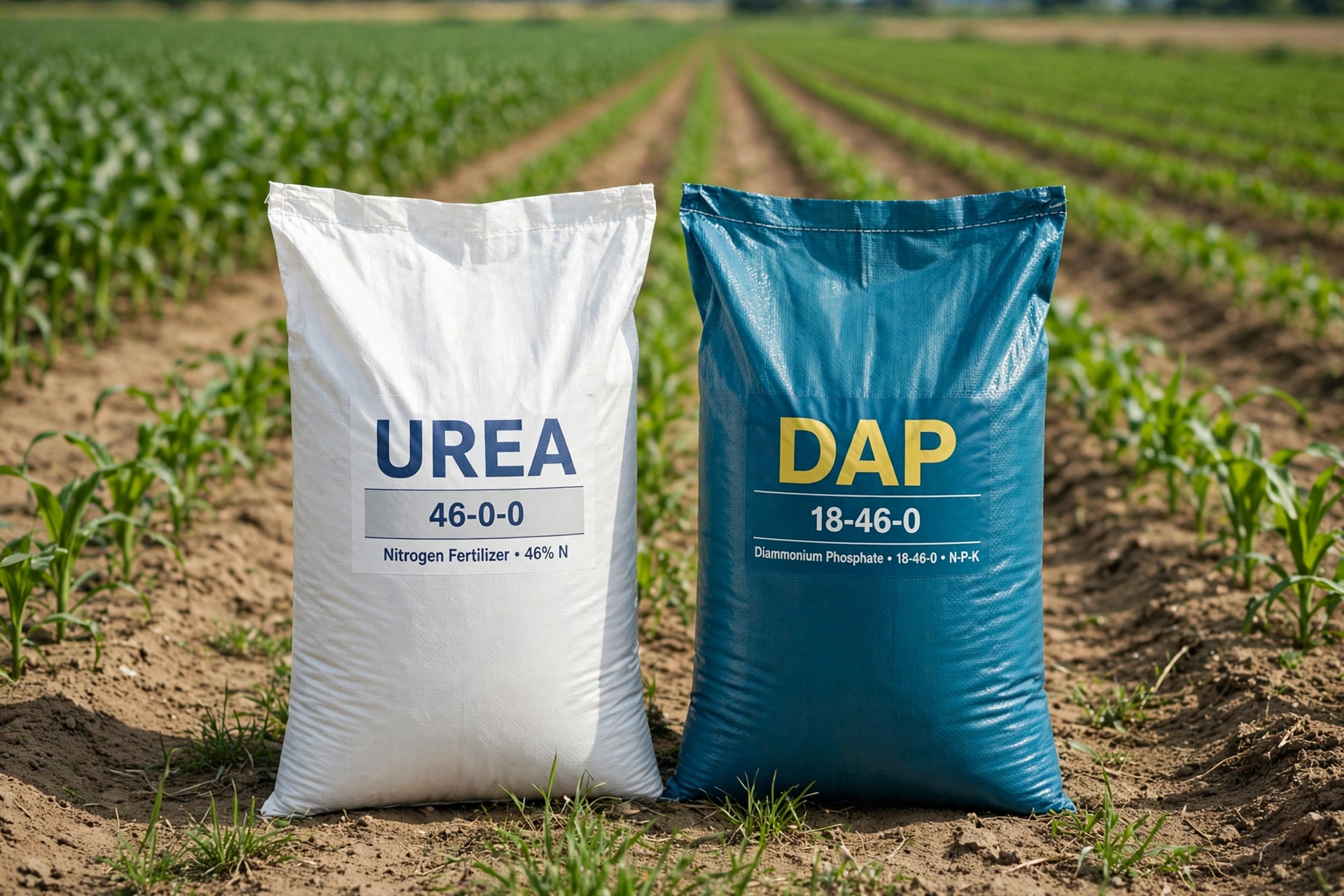
Urea (46% nitrogen) and DAP (18% nitrogen, 46% phosphate) are the two most-used fertilizers in Pakistan and India — and the most confused.
Urea: the nitrogen specialist
Urea is a nitrogen specialist. Its 46% N is the highest concentration of any common solid fertilizer, which is why it is the go-to for top-dressing: quick nitrogen when the crop is growing fast. Split it into two or three applications; a single heavy dose risks losses to the air (volatilization) and causes lodging.
DAP: phosphorus with a nitrogen bonus
DAP is primarily a phosphorus fertilizer that happens to carry nitrogen. Phosphorus barely moves in soil, so DAP must go down at sowing, near the seed zone — top-dressed phosphorus is largely wasted. Its 18% nitrogen is a bonus that counts toward the total nitrogen bill.
Wondering about urea phosphate vs DAP? Both supply phosphorus, but they serve different systems: DAP (18-46-0) is the granular standard for soil application at sowing, while urea phosphate is fully water-soluble and mainly used in drip fertigation. For ordinary broadcast field application, DAP is the economical choice.
The practical rule
The practical rule: DAP at sowing for phosphorus (plus its nitrogen), urea in splits for the remaining nitrogen. Never try to meet a phosphorus need with urea, and never pay DAP prices just for nitrogen.
Check the NPK table in our fertilizer library before buying — the percentages on the bag are the only numbers that matter for the calculation.